
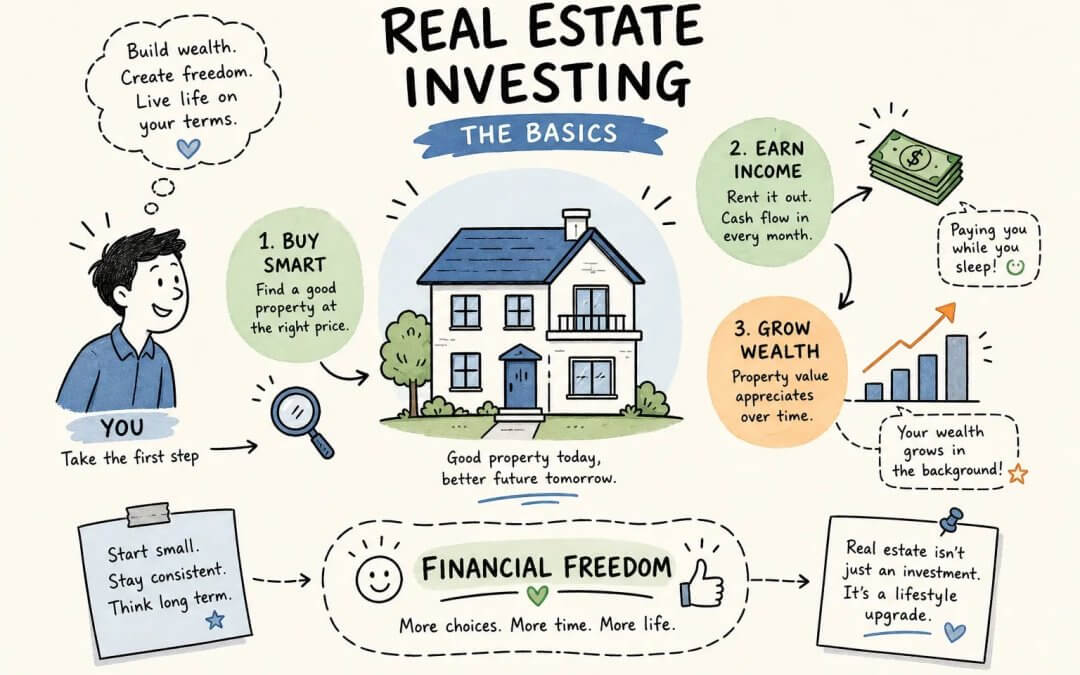
REI stands for real estate investing, the practice of buying income-producing properties to generate monthly cash flow, build long-term equity, and hedge against inflation. If you landed here looking for the outdoor gear cooperative (REI Co-op), this article covers a different subject entirely. For REI Co-op information, including REI store locations, REI membership benefits, REI return policy, REI gear and backpacks, or REI reviews, visit rei.com directly. Real estate has been a major source of individual wealth for many U.S. investors, and it is accessible to working professionals who have never bought a rental property in their lives.
For beginners, though, real estate investing can feel paralyzing. Too many acronyms, too many strategies, too many markets to evaluate, and no obvious place to start. That gap between wanting to invest and actually buying your first property is where most people stay stuck, sometimes for years. That is exactly the gap that the Empowered Investor Network was built to close, pairing investors with dedicated counselors and pre-vetted properties so they can act with real confidence rather than endless research.
This guide covers what real estate investing (REI) actually means, how the core strategies work, which numbers you need to understand before looking at a single deal, and how to take a first step that actually moves you forward.
Key takeaways
- REI means real estate investing: It refers to buying income-producing properties to build wealth through cash flow, appreciation, and mortgage paydown, not speculation on rising prices.
- Buy-and-hold is a commonly recommended starting point: For most beginners, long-term rental properties in affordable markets offer a clear path to passive income without the risk of fix-and-flip.
- Know your core numbers: Cash flow, cap rate, and ROI tell you whether a deal makes financial sense before you commit a dollar.
- Market selection beats local familiarity: High-cost coastal cities often struggle to produce positive cash flow; Midwest and Sun Belt markets like Indianapolis and Memphis tend to offer stronger rent-to-price ratios (Ark7, 2026).
- Your team is your edge: A local market specialist, a lender who works with investors, and a dedicated investment counselor reduce your risk of overpaying or making a bad first deal.
- Free guidance exists: The Empowered Investor Network offers free consultations to help new investors map out goals and choose the right market and property type before spending anything.
What REI actually means in a real estate context
Real estate investing, abbreviated as REI, is a broad category covering any strategy centered on buying property to generate returns. Those returns come from rental income, property appreciation, or both. Unlike stocks or mutual funds, REI gives you a tangible asset you can control directly: you decide the tenants, the rents, the improvements, and when to sell. That direct control is a core reason serious wealth builders favor it over purely passive instruments.
The most important distinction beginners need to make is between investing and speculating. Speculation means buying a property and hoping the price goes up. Investing means buying a property that produces income from the start, or close to it, so your financial outcome does not depend entirely on the market being generous. The income-first mindset is the foundation of a sound investing strategy. It is what separates people who build durable portfolios from people who buy, worry, and hope.
The main REI strategies beginners should know
Buy-and-hold rentals
Buy-and-hold rental properties are the most accessible starting point for most investors, and the strategy the Empowered Investor Network focuses on. You purchase a property, place a tenant, collect monthly rent, and let the mortgage balance decrease over time while the asset builds equity and, in most markets, grows in value over time. Single-family homes in affordable Midwest and Sun Belt markets are the most practical entry point for first-time investors because they are easier to finance, easier to manage, and easier to sell than larger multifamily buildings.
Fix-and-flip
Fix-and-flip is the strategy that gets the most attention on television, but it is not a beginner-friendly approach. It requires renovation experience, tight cost control, short-term financing, and favorable market timing. One bad contractor or one slow market can erase the entire projected profit. For working professionals who want income without a second full-time job, buy-and-hold wins clearly.
Single-family vs. small multifamily
Single-family rentals and small multifamily properties each have a place in a real estate portfolio, but they are not interchangeable for a first deal. A duplex or triplex can generate more income per property, but it also brings more moving parts: multiple tenants, more maintenance calls, and a more complicated financing process. For a first REI deal in a landlord-friendly state, a single-family rental removes the complexity most beginners do not need on their first transaction.
The numbers that drive every REI deal
Cash flow
Cash flow is the monthly or annual income left after all expenses: mortgage payment, property taxes, insurance, maintenance, property management, and vacancy reserves. Positive cash flow means the property pays you; negative cash flow means you are subsidizing it.
How to calculate cap rate
Cap rate, or capitalization rate, measures the property’s operating yield independent of financing. Divide the net operating income (rent minus operating expenses, before the mortgage) by the property’s purchase price or value. Cap rate lets you compare properties across different markets without the mortgage complicating the picture. According to data from Lofty AI (as of 2026), some Midwest and lower-cost Sun Belt markets show cap rates in roughly the 7% to 10% range for single-family rentals, well above what most high-cost coastal markets can offer.
Cash-on-cash vs. ROI
ROI, specifically cash-on-cash return, measures what you actually earn on the cash you put in. A property can look attractive on one metric and fall apart on another, which is why beginning investors who look only at the purchase price or the rent miss the full picture.
How to take your first real steps in REI
The first question every new investor needs to answer is not “which market?” or “which property type?” It is: what am I actually trying to build? Monthly cash flow to eventually replace a paycheck? Long-term appreciation to fund retirement? Both? The answer shapes every decision that follows, and skipping it is the single most common reason people stay in permanent research mode instead of buying.
Once your goal is clear, market selection becomes a data exercise rather than a guessing game. The biggest mistake beginners make is limiting their search to wherever they live. If you are in Los Angeles, San Francisco, or New York, local properties are almost certainly priced far too high to generate positive cash flow. Markets like Indianapolis (approximately 0.64% monthly rent-to-price ratio), Memphis (approximately 0.69% monthly), and Columbus, Ohio (approximately 0.63% monthly) consistently offer stronger economics for buy-and-hold investors, according to 2026 data from Ark7. Real estate investing does not require you to invest locally. It requires you to invest in the right market.
Your team is as important as your market. A successful first deal depends on a local market specialist who knows the neighborhoods, a lender experienced with investment properties, and a property manager who protects your asset. Add an investment counselor who coordinates all of it, and you have a meaningful structural advantage. Trying to assemble this team from scratch as a first-time investor, in a market you do not live in, is one of the most reliable ways to overpay, make a poor deal selection, or simply do nothing at all.
Common mistakes that derail first-time real estate investors
Underestimating total operating expenses causes more damage than almost any other beginner error. New investors often budget for the mortgage and nothing else, leaving out property taxes, insurance, vacancy allowances, maintenance, capital expenditures, and property management fees. When those costs hit, a deal that looked profitable on paper becomes a monthly drain.
Overestimating rent and occupancy is an equally dangerous trap. Projections based on optimistic rent assumptions, or the assumption that the property will always be occupied, can make an unprofitable deal appear attractive. Conservative underwriting means using realistic comparable rents, building in a vacancy rate, and stress-testing the numbers against several months without a paying tenant. If the deal only works under best-case assumptions, it does not work.
Buying based on personal preference instead of tenant demand is a subtler mistake, but it is just as costly. The property you would enjoy living in may not match what renters in that market actually want. Layout, proximity to employment, schools, and transportation matter far more to your tenant demographic than your taste in finishes. Treat the rental as a business asset from the first showing, and evaluate it like one, including checking local eviction rules and landlord-tenant law, since those can materially affect your returns.
How the Empowered Investor Network simplifies real estate investing for beginners
The Empowered Investor Network was designed for the exact situation most first-time investors find themselves in: motivated to build wealth through real estate, but uncertain which market to target, which numbers to trust, and which professionals to work with. Rather than leaving investors to solve all of that independently, the platform pairs clients with dedicated investment counselors who guide them from goal-setting to closing. Properties are sourced through a national network of local market specialists and are pre-screened for cash flow potential. You do not need to become a local market expert in Indianapolis or Memphis. You need a team that already is one.
Confirm the current terms directly with the Empowered Investor Network before relying on this arrangement for your planning.
Beyond the counseling relationship, the Empowered Investor Network provides ongoing investor education through the “Creating Wealth” podcast, videos, AI chat tools, and practical deal analysis resources. New investors can start with a free consultation to map out their goals, explore which markets fit their financial situation, and understand what a realistic first deal looks like. It is a guided process from your first question to your first property, with real people coordinating the work alongside you, not a course that leaves you with homework and no follow-through.
The bottom line on REI
At its core, real estate investing involves straightforward mechanics: buy a property that produces income, rent it out, and let time and compounding do the work. The mortgage paydown, the rent income, and the market appreciation all run in the background. What makes it hard for beginners is the volume of decisions that come early, which market, which property type, which numbers matter, and which team to trust. None of those decisions require you to figure it out alone.
The investors who build durable portfolios are not necessarily smarter than the ones who stay stuck. They got clear on their goals, picked a market based on data rather than familiarity, and built a team of people who had already done what they were trying to do. That combination moves people from researching to owning.
If you are ready to stop reading about real estate investing and start moving, reach out to the Empowered Investor Network to book a free consultation. A clear plan and the right team around you are what your first rental property actually requires.
Frequently Asked Questions
Do we have to invest in the city where we live or can we buy property elsewhere?
No, you do not have to invest locally; real estate investing does not require you to invest where you live. We explain that markets like Indianapolis, Memphis, and Columbus often provide stronger rent-to-price economics than high-cost coastal cities, so choosing the right market matters more than local familiarity.
Can we get help before spending any money to explore whether REI is right for us?
Yes, you can start with a free consultation to map out goals and market fits. We offer free consultations through the Empowered Investor Network to help new investors understand realistic first deals and choose markets and property types before committing funds.
Which specific markets are cited as offering stronger economics for beginners?
Indianapolis, Memphis, and Columbus, Ohio are cited as examples of markets with stronger rent-to-price ratios for buy-and-hold investors. We note approximate monthly rent-to-price ratios for those markets, about 0.64% for Indianapolis, 0.69% for Memphis, and 0.63% for Columbus, based on 2026 data from Ark7.